
Helix System Overview

System Scope
A high-level view of how Helix operates as a runtime system.
Core capabilities are implemented and proven in prototype, with additional systems evolving toward production.
Technical detail is abstracted to focus on structure, interaction, and role.
Helix is not an AI model.
It is the system that makes models safe, consistent, and bounded inside a living world.
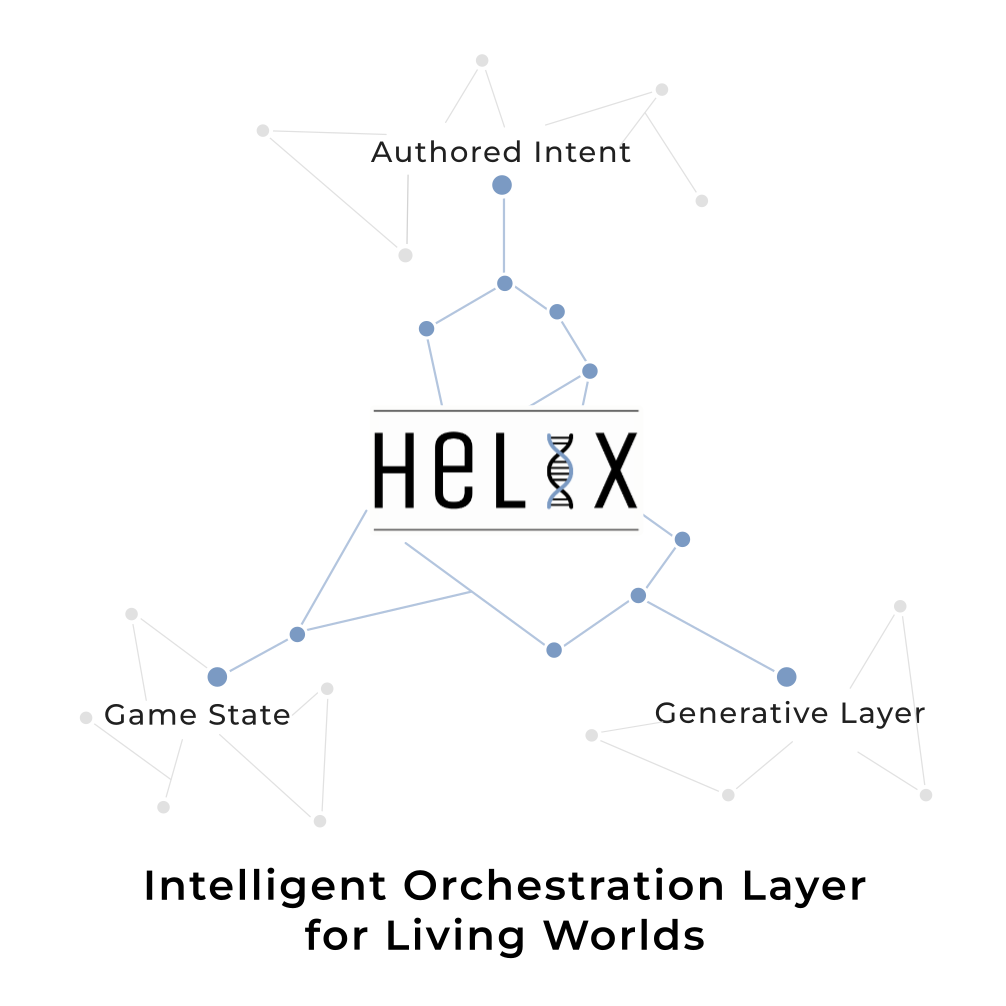
High Level Helix Architecture
A simplified view of how Helix fits within the systems driving the world.

What Helix Does
Helix determines how systems behave together - in context, not in isolation. It is not integration - it doesn’t just connect systems. Integration produces outputs. Helix makes those systems behave as one - delivering a living world experience.
Core System Capabilities
1
2
Real-Time Orchestration
Memory & State Continuity
Behaviour is shaped at runtime, not pre-scripted.
Characters and systems retain memory and evolve over time.
3
4
Multi-System Coordination
Guardrails & Constraints
AI outputs, authored materials, and world state remain in sync.
Rules, tone, and boundaries are enforced dynamically.
5
6
Observability & Traceability
Model-Agnostic Architecture
Behaviour can be observed, understood, and corrected.
Different AI models can be used - with no lock-in to a single vendor.
Control & Safety Layer
Helix is designed to operate within defined boundaries - with built-in visibility, control, and intervention.
- Behavior is bounded by authored rules, tone, and intent
- Systems are observable and understandable at runtime
- Built in interventions - tune, override, or roll back actions
- Real-time monitoring and escalation enable proactive intervention
- Player-facing controls define consent, intensity, and engagement
Building Helix required aligning authored intent, runtime state, and adaptive AI behavior - and refining that alignment through live, stateful systems.
Helix is designed for this reality - supporting adjustment, tightening boundaries, and re-authoring over time as understanding improves.