
4. The Five Principles of Responsible AI in Games
A framework for responsible AI in games.
4.1 The Five Principles Overview
Having defined The Five Levels of Human Impact for AI in Games and the corresponding social license requirement, we now outline the Five Principles of Responsible AI in Games, the core design commitments that make those systems safe, ethical, and worthy of community trust.
These Principles are intended to signal to the industry and key stakeholders what we believe should be considered foundational ethical design and implementation commitments for AI-enabled game systems, especially those that influence the player experience (corresponding broadly to Levels 3–5 of the Human Impact model).

The sections that follow set out how these principles translate into practical design commitments.
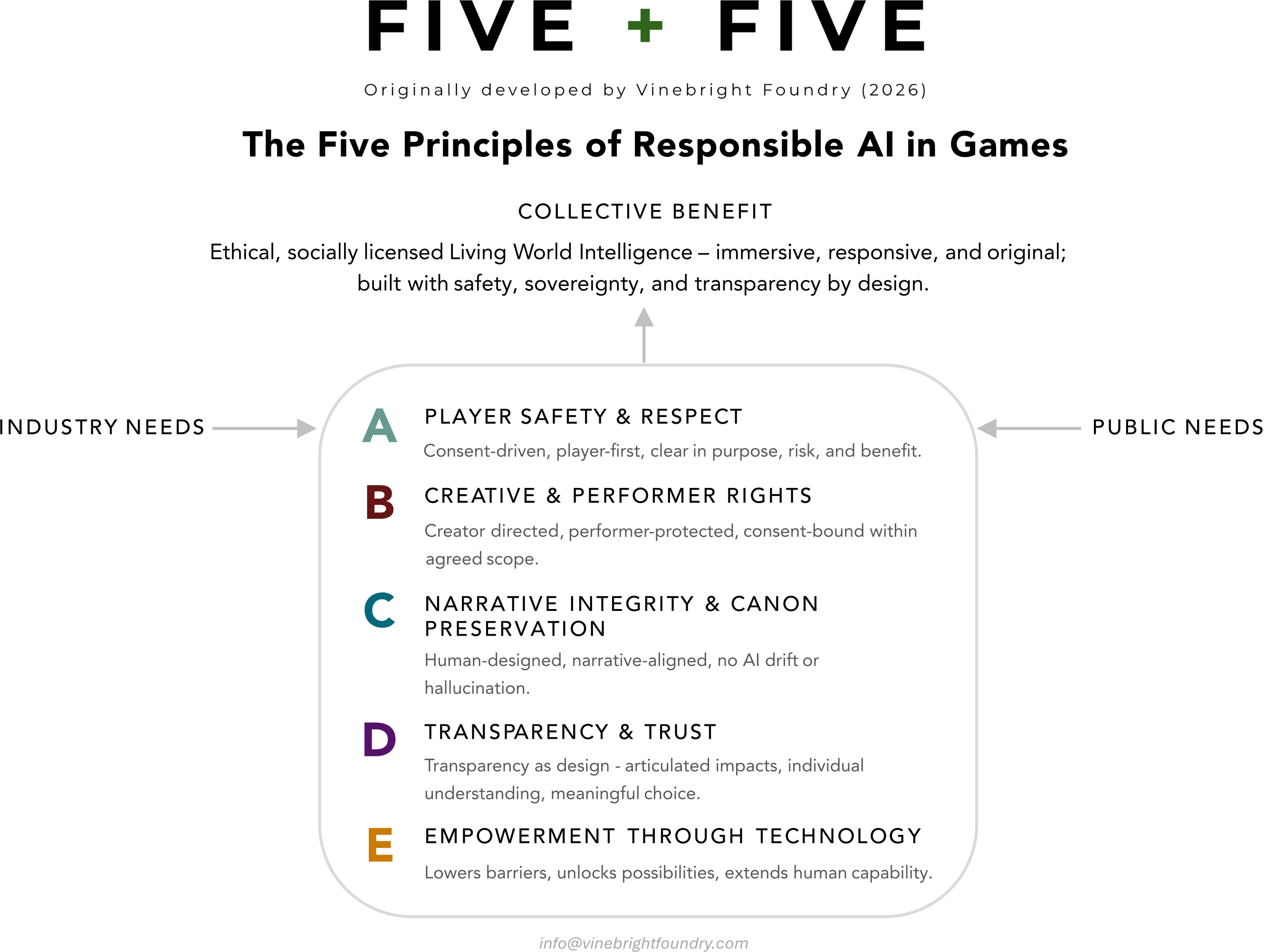
4.2 Principle Summary
A
A. Player Safety & Respect
Consent-driven, player-first, clear in purpose, risk, and benefit.
AI should be designed to avoid placing players in emotionally unsafe or overly intense situations, to avoid allowing inappropriate relationships to form between players and the world, and to operate within transparent, understood boundaries.
B. Creative & Performer Rights
Creator-directed, performer-protected, consent-first within agreed scope.
B
Creators should keep creative control and IP sovereignty, with performers’ contributions safeguarded through clear, contract-driven consent. Re-scoping or reuse of the data and assets should only occur with direct user engagement and explicit agreement.
C. Narrative Integrity & Canon Preservation
Human-designed, narrative-aligned, no AI drift or hallucination.
C
AI models used are expected to respect authored source material, and not distort characters, lore and canon, or narrative intent. The role and scope of the AI should be within creator-defined scope, and models should operate inside specified parameters and constraints.
D. Transparency & Trust
Transparency as design - articulated impacts, individual understanding, meaningful choice.
D
Studios and creators, performers, and players should have the ability to opt in or out of how their data, identity, and creative assets are used. External model use should be transparently disclosed. All IP and emergent data should remain creator owned and controlled where possible, and if not should be governed by creator-defined terms and consent.
E. Empowerment Through Technology
Lowers barriers, unlocks possibilities, extends human capability.
E
AI should extend human capability, not replace it – and reduce repetitive, monotonous tasks so that creators can focus on higher-value, more complex creative work. It should lower barriers and spark possibilities, enabling new creators with fewer resources to bring to life rich, immersive experiences.
4.3 The Five Principles Detail
Following is a deeper exploration of each Principle - how they apply to real design decisions, where the risks sit, and why emotional safety, creator sovereignty, and transparency must be treated as core system requirements, by design, not by footnote.
View the Five Principles:
A. Player Safety & Respect
Comprehensible, progressive consent-driven; player-first, clear in purpose, risk, and benefit.
Principle Goal
Ensure players feel secure when using AI-enabled game systems, with clear understanding of purpose, risks, and benefits, and founded on player agency and emotional wellbeing. We do not simply aim to avoid harm - we want to build AI characters and worlds players can trust, enjoy, and are safe returning to.
Indicative Human Impact
When boundaries are unclear, unpredictable, or unintentional, players may feel confused, overwhelmed, or unsafe - even without obvious harm, and sometimes beyond the game itself.
When gaining emotional trust is part of the experience, and players have clarity about scope, benefits, risks, and privacy, they can feel relaxed enough to truly engage, and enjoy positive immersion without intensity, pressure, or escalation. This emotional pattern can be expressed simply as:

Responsible Design Considerations
- When clearly articulated and accessible, system scope and boundaries can be a key tool in building trust. When they change, engagement and awareness can help preserve player confidence
- The higher the potential human impact, the more formal the consent flows that may be appropriate. Consent mechanisms reduce risk, but cannot eliminate all vulnerability in emotionally complex play.
- Ongoing monitoring can be designed that recognizes and responds to risky interaction patterns
- Studios are encouraged to author emotional boundaries and clear pathways for escalation
- Avoiding manipulation, intense emotional hooks, inappropriate intimacy escalation, and unpredictable emotional models can support safe and enjoyable engagement
- Player identity or disclosures should be treated as explicit and opt-in, rather than inferred or derived
Industry Opportunities
Designing for Player Safety & Respect does not mean restricting tone or limiting intensity - instead it encourages intentional emotional architecture appropriate to genre, audience, and narrative purpose.
Responsible Design becomes a constraint only when left to the end; when authored early, it turns emotional safety into a craft layer rather than a compliance burden.
- Dialogue, pacing, and relational arcs can reflect authored intent, with emotional consequences that feel legible and proportionate, and are not unpredictable in nature
- Games can embrace tension, intimacy, conflict, dramatic stakes, and even darkness - when those elements are intentional rather than algorithmic
- Players can feel emotional agency - interactions are readable, voluntary, and consistent with tone, not coercive or identity-threatening
- Creative teams are freed to focus on designing emotional architecture, desired tone and feeling, and world lore, rather than manually implementing every reactive branch or repetitive dialogue detail
Worlds don’t get smaller when designed safely - they get deeper.
Guardrails unlock trust, not limits.
B. Creative & Performer Rights
Creator-directed, performer-protected, consent-bound within agreed scope.
Principle Goal
Ensure creators and performers feel respected, protected, and confident when contributing their work to be used in game systems. Participation should feel safe, without fear of misrepresentation or silent reinterpretation, and the possibilities of AI should elevate craft, rather than diminish rights.
Indicative Human Impact
If creative rights are unclear or unbounded, and contributions are reused or reinterpreted without consent, creatives may feel misrepresented, exposed, lose trust in the industry, and become reluctant to participate.
When terms of use are transparent, respectful change processes exist, and contributors retain clear agency over scope, collaboration on games will feel safer and more inviting. Contributors are confident, advancements become opportunities, and AI is a medium for elevating creativity rather than appropriation.
Responsible Design Considerations
- Respectful boundaries and consent encourage creative participation, which can support richer collaboration, more intentional narrative expression, and artistic originality
- Public misunderstandings about AI may create reputational pressure for creatives, even when ethically scoped. Visible alignment with human authorship and fair terms can help prevent stigma
- Responsible practice extends beyond legal ownership - honoring emotional, reputational, and narrative boundaries associated with original work helps protect creative confidence
- Contributors benefit when studios acknowledge the ongoing value of human creative input in adaptive systems, not as a replacement layer, but as a collaborative craft
- Legal and ethical scope, including IP ownership and reuse rights, are not identical; maintaining alignment with original intent, tone, persona, emotional context, and reputational fit strengthens trust
- Synthetic performance may be perceived as faster or cheaper, but reductions in originality, innovation, and imagination may result in a homogenous product that is less interesting or attractive to players
AI can extend performance, canon, and craft
- but only human contributors make worlds worth extending.
Industry Opportunities
- The commercial upside of adaptive AI isn’t smaller teams - it’s richer games, stronger emotional attachment, higher replayability, and expanded audience reach. That’s how AI can create value
- Purpose-built, intentional, original work can be amplified rather than replaced - extended into more fully realized worlds, shared with wider audiences, and strengthening contributor identity and visibility
- With the assistance of AI tools, narrative design can become less procedural, and more expansive. Players rarely ask for less authenticity or more repetition – nuance and variation are a design asset
- Richer, deeper worlds increase replayability, enabling branching that is impractical to author manually
- Work opportunities shift rather than disappear – in high intensity adaptive worlds the role of emotional safety experts, narrative guardians, and safety & intervention operations becomes foundational
Creative rights aren’t a constraint - the future of distinctive, compelling living worlds depends on human originality and new creative capability.
C. Narrative Integrity & Canon Preservation
Human-designed, canon-constrained, drift-resistant by design.
Principle Goal
Ensure AI strengthens worlds and games rather than overwrites them - enabling adaptive storytelling without sacrificing authored narrative intent. Creators should be able to define the level of improvisation allowed, and within those boundaries, players could choose the style of experience that feels right for them.1
Indicative Human Impact
If human-defined parameters aren’t clearly established or enforced, AI-enabled narrative systems can evolve in ways that are contrary to creator intent and player expectations - eroding trust and creating risk.
When creators retain narrative authority and can specify the degree of improvisation allowed, players can engage with AI-enabled systems confidently. Canon, tone, and authorial intent stay intact; the world feels coherent and reliable, and structured control functions as a safety system - not just a storytelling device.
Responsible Design Considerations
- The role and scope of the AI should be creator-directed, with models operating inside clearly specified narrative, emotional, and mechanical constraints
- Human-authored narrative and boundaries don’t just preserve canon – they also protect emotional tone, player safety, and cultural authority where narratives draw on lived tradition
- When the degree of emergence is intentional, AI acts as a narrative companion rather than narrative authority – enabling variation without volatility or drift
- Within a stable canon and tone, creators define where improvisation is allowed - and inside those ranges, players could choose the style of experience that feels right for them, where appropriate
Industry Opportunities
- By giving creators and players levers to define autonomy, AI can adapt the experience while still operating inside the same world rules
- Clear canon isn’t a constraint - it becomes the backbone that makes adaptation sustainable across sequels, DLC, mods, and live updates
- That’s where the industry gains something genuinely new - the ability to let players explore different flavors of the same world, without multiplying production cost or fracturing canon. For example:
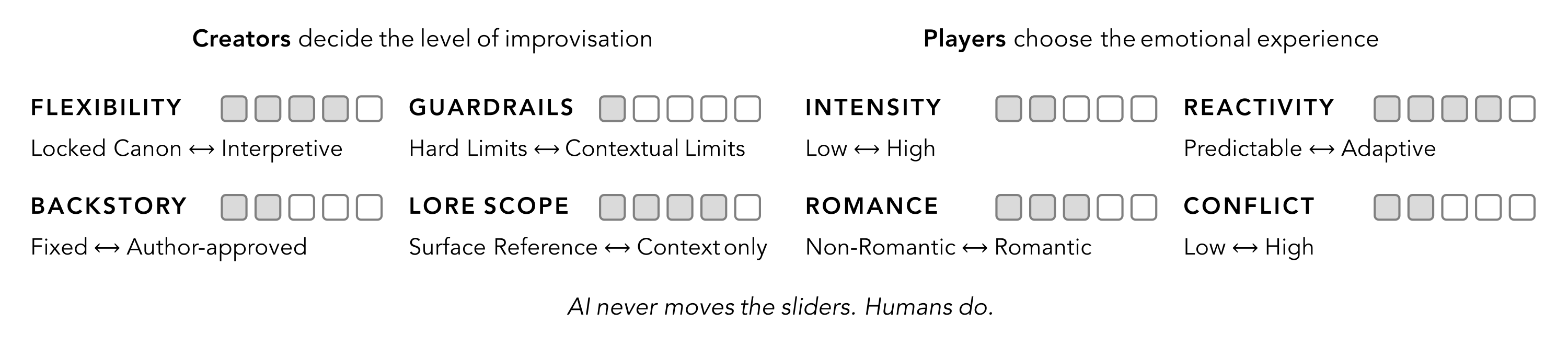
AI at this level shouldn’t rewrite the world -
it should create new experiences grounded in the one that already exists.
D. Transparency & Trust
Principle Goal
Ensure studios, creators, performers, and players all feel informed, respected, and in control when interacting with AI-supported systems. Transparency should support clear understanding of what the AI does, and allow each individual to choose how deeply they engage, aligned with their level of comfort and expectations.
Indicative Human Impact
If the intent, boundaries, risks, and benefits of using AI in a game are unclear to stakeholders, later disclosure can feel like a breach of trust, leaving them feeling misled, taken advantage of, or exposed.
When proactive clarity replaces suspicion with mutual understanding, it enables informed consideration, meaningful choice, and genuine individual autonomy. Transparency safeguards safety and rights, protecting everyone involved. Feeling “part of it” not “subject to it” reinforces agency and respect.
Responsible Design Considerations
Committing to transparency and alignment with established societal and regulatory expectations collectively works towards the same thing - socially legible trust built in plain sight.

- State the intent. Explain why AI is being used so assumptions or suspicion don’t fill the gaps
- Define the limits. Commit to boundaries to avoid fear of invisible changes or silent reinterpretation.
- Describe the impact. Share likely risks, benefits, and trade-offs early to enable considered choice
- Explain how data and creative assets are used. Be explicit about assets, identity data, inputs, and analytics to support mutual understanding and protect autonomy
- Signal change before it happens. If scope evolves, communicate early - it helps preserve trust.
- Preserve agency. Offer options for levels of participation, aligned to comfort and expectations
- Set realistic expectations. Don’t oversell or undersell the AI - protect the industry’s credibility
Transparency isn’t a binary action and outcome
- it’s the sum of every moment the system chooses to be clear.
Industry Opportunities
- Transparency strengthens internal design clarity. Clearly defining what the AI does prompts sharper thinking about scope, emotional impact, boundaries, and intent, and can make feedback more precise so teams learn faster.
- This clarity elevates team alignment - narrative, design, engineering, and performance all operate from the same understanding, reducing rework and avoiding costly “AI drift” later.
- Visible expectations mean less confusion and fewer escalations - saving time and energy for everyone.
- Trust isn’t “soft” – it’s a valuable asset. Clarity reduces reputational risk, and transparency is almost always cheaper than crisis management - especially as markets begin to punish opacity.
Worlds don’t get smaller when designed safely - they get deeper.
Guardrails unlock trust, not limits.
E. Empowerment Through Technology
Lowers barriers, unlocks possibilities, extends human capability.
Principle Goal
Ensure AI unlocks opportunities for existing and new creators by widening access to more advanced tools that augment and uplift human capability, not replace it. AI should create space for skills to evolve and reduce repetitive work, so people can focus on deeper craft, creativity, learning, and collaborative problem-solving.
Indicative Human Impact
If AI is used to bypass original design and craft rather than support them, it may create over-reliance on AI tools, erode team skills, flatten creative outcomes, and push invisible labor to cleanup and QA.
When AI is used to accelerate iteration and enable safe experimentation, it can free individuals to work at deeper levels and grow their skills into new areas. It can also lower barriers to participation, helping smaller teams to ship more ambitious work, and opening space for new contributors and roles across the ecosystem.
Responsible Design Considerations
- Responsible design considers how AI reshapes creative work, power dynamics, and tool dependence
- Tier 4 AI should be considered assistive by default – it can help and support work, but should not drive it
- The final say in the process should remain with humans – for quality, safety, and as a fail-safe
- Third-party tools should meet the same standards as internal ones, with clear scrutiny over IP, data storage, and sharing. Portability matters too - studios shouldn’t be locked in for a game’s entire lifecycle
- Time saved through AI investment should benefit humans, not just margins - creating space for learning, mentoring, and intentional experimentation that prepare for the next generation of AI games
Industry Opportunities
- Broader access to AI tools brings new storytellers, increased global talent, and culturally richer games.
- Smaller teams can deliver polish and scope that used to be out of reach
- Rapid prototyping and cheaper experimentation de-risk ideas, speed iteration, and raise overall creative quality
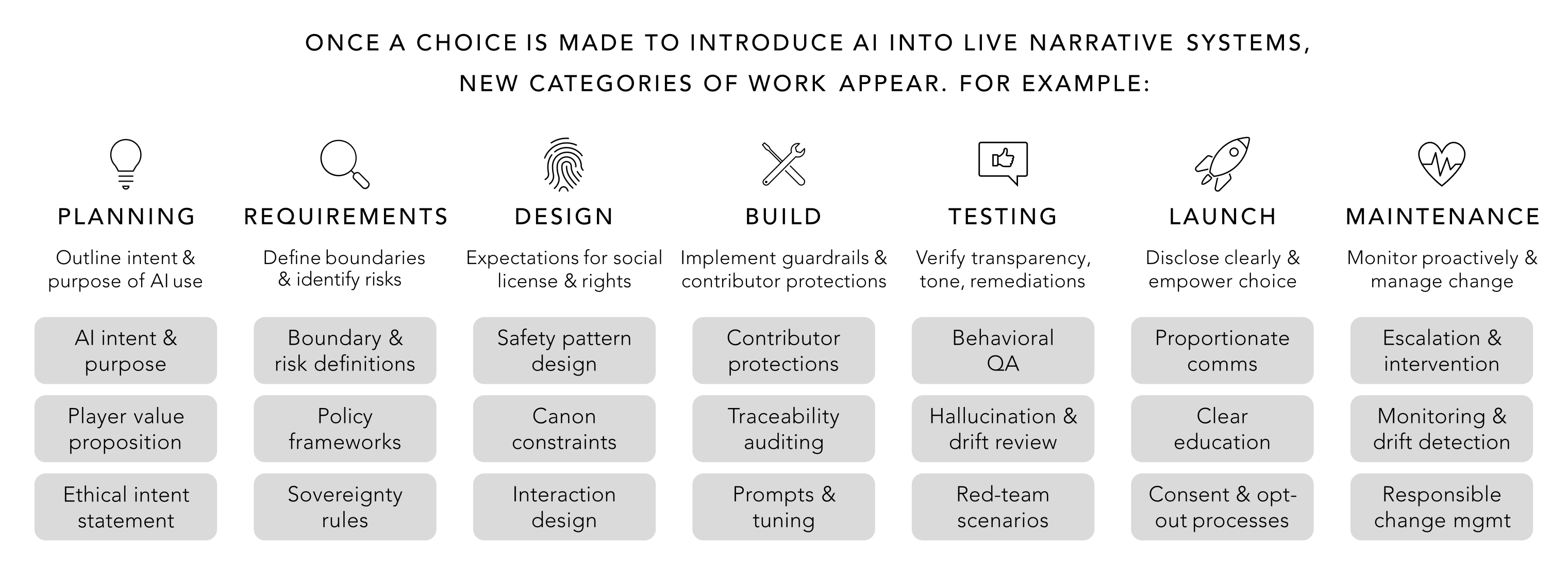
As AI enters live narrative pipelines, studios don’t just add tools - they inherit new responsibilities around safety, coherence, player trust, and ethics.
4.4 Join the Conversation
This is a living framework.
We’re refining it with input from creators, studios, players, and researchers. If you have a perspective, challenge, or insight, we’d love to hear it.
4.5 References
1. Five + Five is framed first around Tier-4 creator-directed living worlds – the point at which misalignment can do the most damage if ethics lag behind capability. As systems move toward Tier-5 fully emergent, AI-driven worlds, the Principles remain the same - but expectations for consent, governance, and transparency increase substantially.